Skip to content
Native & Florida-friendly landscaping — Northeast St. Petersburg 727-594-9694 · Holiday lights — booking now

St. Petersburg, Florida

A Landscape Built For This Coast

Native and Florida-friendly design, planting, and hardscape for St. Pete yards. Built to take the salt air, the summer rain, and the storms — and still be somewhere you actually want to sit.

  • Free on-site estimates
  • Native & Florida-friendly
  • Locally owned in St. Pete

Native plant specialists

We plant for this ground, not a catalog

St. Pete yards sit on sand, take salt off the water, and get taken apart by storms every few years. Most landscaping here ignores all three. Ours is built around them.

Native & Florida-Friendly

Species chosen for the ground they're actually going into — not whatever the nursery had in volume that week. Plants that belong here need less water, less feeding, and less replacing.

Built For Coastal Soil

Sandy, fast-draining and alkaline, with salt in the air and sometimes in the ground. We plant for what a St. Pete yard actually is, so things establish instead of limping along for a season.

Design Through Install

Drawings, planting, sod, pavers and stone from one company. No standing between three contractors trying to get one yard finished.

Northeast St. Pete

Snell Isle, Old Northeast, Crescent Lake, Crescent Heights, Euclid–St. Paul and Magnolia Heights. Close enough to come back and check how it's establishing.

This season · Booking now

Holiday lights, hung by landscapers

Rooflines, palm trunks and the trees out front, designed for the whole property rather than strung along the gutter. We put them up, keep them lit through the holidays, and take them down in January.

  1. Now – November

    Walkthrough & price

    We look at the house and the yard, plan what gets lit, and send a written price. The walkthrough is free.

  2. November

    Installed in booking order

    Earlier bookings get the earlier dates, with the aim of having homes lit before Thanksgiving.

  3. January

    Taken down

    We come back after the holidays and take it all down — and can store your lights until next season.

Where the work happens

The two jobs everything else is built around

Planting and stone. One puts living things in ground that fights them, the other puts hard surfaces on sand that moves. Both are won or lost below the surface, before anything visible goes down.

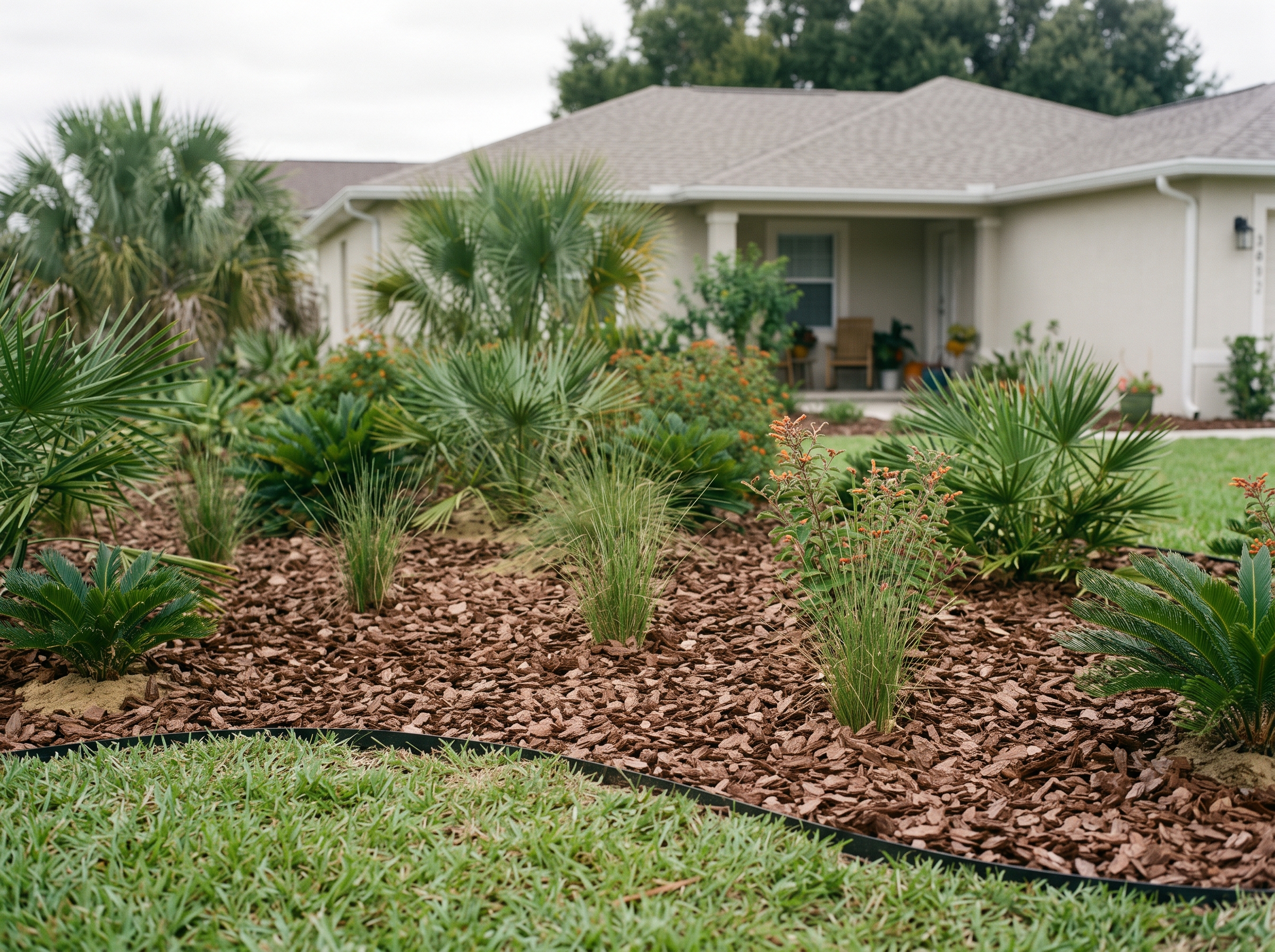
Illustration of a Florida native planting bed in fresh mulch

01 Softscape

Plant & Sod Installation

St. Pete sand drains fast and holds almost nothing — not water, not nutrients. Plants that thrive in a Georgia nursery sit here for a season and give up. We choose species that want this ground, prep the soil to hold what they need, set them to grade, and mulch them properly so they establish rather than survive.

  • Native and Florida-Friendly planting beds
  • Trees set, staked and mulched to establish
  • Sod, turf replacement and bare-patch repair
  • Soil prep and grading for fast-draining ground
Get a planting estimate
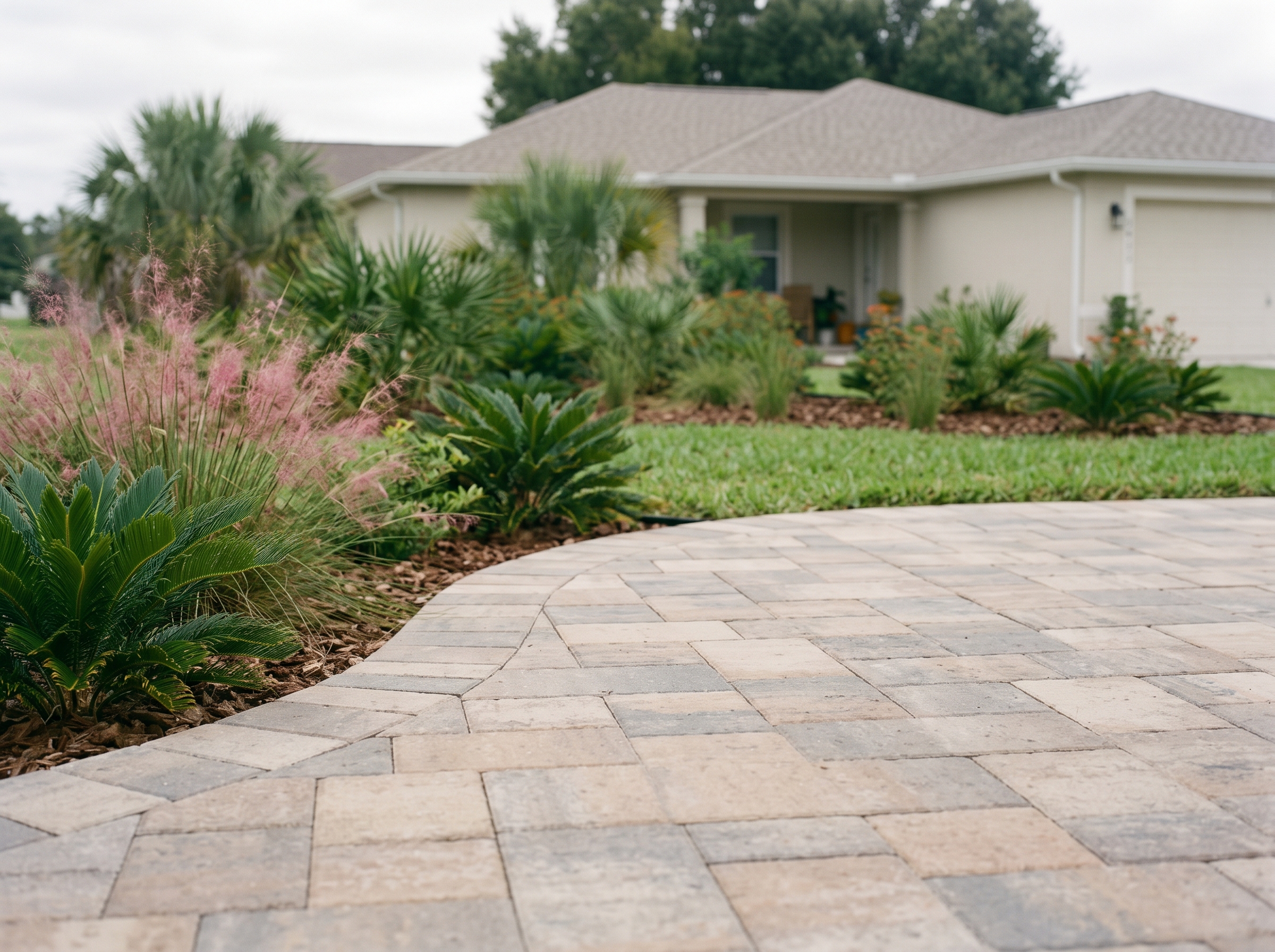
Illustration of a paver patio beside a native planting bed

02 Hardscape

Pavers & Stone Work

A patio never fails at the surface. It fails underneath, where the base was thin or the edge had nothing holding it. On sand that happens faster, and summer rain finds every shortcut. We build the base to depth, restrain the edges, and pitch the drainage for the downpours this coast actually gets.

  • Paver patios, walkways and driveways
  • Flagstone and natural stone work
  • Retaining walls and seat walls
  • Compacted base, edge restraint, drainage pitch
Get a paver estimate

Why native

Plants that already know this place

Every plant in a St. Pete yard is up against the same four things: sand that won't hold water, salt coming off the bay, a wet season that drowns roots, and a dry one that doesn't let up. Florida natives and Florida-Friendly species evolved into exactly those conditions. Most of what gets sold at the big-box garden center didn't.

  • Less water, permanently

    An established native bed gets through a Pinellas dry season on rainfall and not much else. That's not just a lower bill. The water management district already limits which days you can water, and tightens that further in a drought.

  • Less fertilizer, by design

    Pinellas County bans nitrogen and phosphorus fertilizer from June 1 through September 30, because what goes on a lawn in July ends up in the bay. A landscape that needs feeding to look alive is a problem here. One built from plants that belong doesn't have that dependency.

  • Built for wind and salt

    Species that grew up on this coast are structured for it — they bend, shed leaves, and come back. After 2024 a lot of St. Pete homeowners learned which things in their yard were built for this and which were just decorating.

Common here. Struggles here.

Four things we get asked to replace more than anything else, and what goes in instead.

Queen palm

Sabal PalmFlorida's state tree. Handles wind and salt, and doesn't yellow out in alkaline sand.

Boxwood hedge

Simpson's StopperEvergreen, fragrant, salt-tolerant, and it doesn't rot out in a humid summer.

Ficus hedge

Walter's ViburnumScreens just as well without the whitefly, and without roots going after your pipes.

Impatiens beds

BlanketflowerColor through the whole hot stretch on sand, sun and almost no water.

None of this means a yard full of scrub. It means the things that carry the design are the things that can hold it up.

Ask what would work in your yard

Local conditions

What this coast does to a yard

Landscaping advice written for everywhere doesn't survive contact with a Pinellas peninsula. Four things here decide whether a landscape holds or quietly fails over two seasons, and none of them are visible from the street.

01 Most of the peninsula

Sand that drains before it feeds

Much of St. Pete sits on fine sand over shell — fast-draining and alkaline, often well above neutral. At that pH, iron and manganese lock up chemically and the plant can't take them up no matter how much is in the ground. It's why so many yards here have shrubs that get watered, get fed, and still go yellow between the leaf veins.

More fertilizer doesn't fix a pH problem. We build the planting zone to hold moisture and nutrients, and pick species that tolerate high pH rather than fighting it every season.

02 Snell Isle · Old Northeast waterfront

Salt, and how far it reaches

Exposure changes across a single property. The waterfront edge takes direct spray off the bay; twenty feet behind the house, in the lee of the building, is a different planting environment altogether. Treating a whole lot as one zone is why half a landscape thrives and the other half burns back.

We plant to the exposure, not to the address — the salt-hardened species where the wind actually lands, and everything else behind them.

03 Snell Isle · Old Northeast · Coffee Pot Bayou

After saltwater comes through

Surge doesn't only kill what it touches. It leaves salt behind in the root zone, and that ground stays hostile long after the water is gone. Replanting straight back into it is how people lose the same bed twice in eighteen months and conclude they have a black thumb.

Where it's practical we flush the root zone with fresh water and replace the worst of the soil before anything goes back in, then replant with species that can handle what's left.

04 Before June 1, every year

Canopy work ahead of the season

Trees come down in a storm because of something that was already wrong — a dense crown the wind can't pass through, co-dominant stems splitting at a weak union, deadwood waiting to go. That's all visible and correctable in March. It isn't correctable in September.

Thinning opens the canopy so wind moves through instead of pushing the whole crown over. It's never topping — topped trees throw weak, fast regrowth and come apart in the next storm.

Every property sits somewhere different on all four of these. That's the first thing we work out when we walk it.

Have us walk yours

Our work

Real yards, before and after

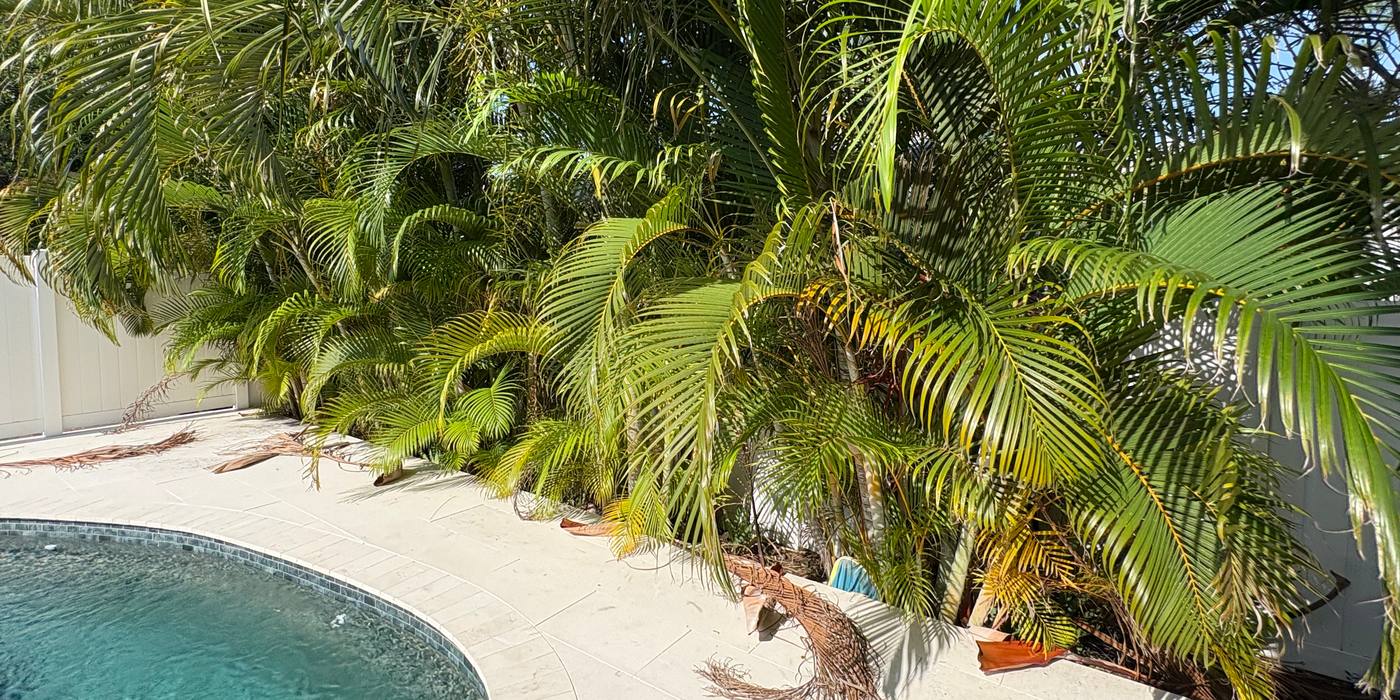
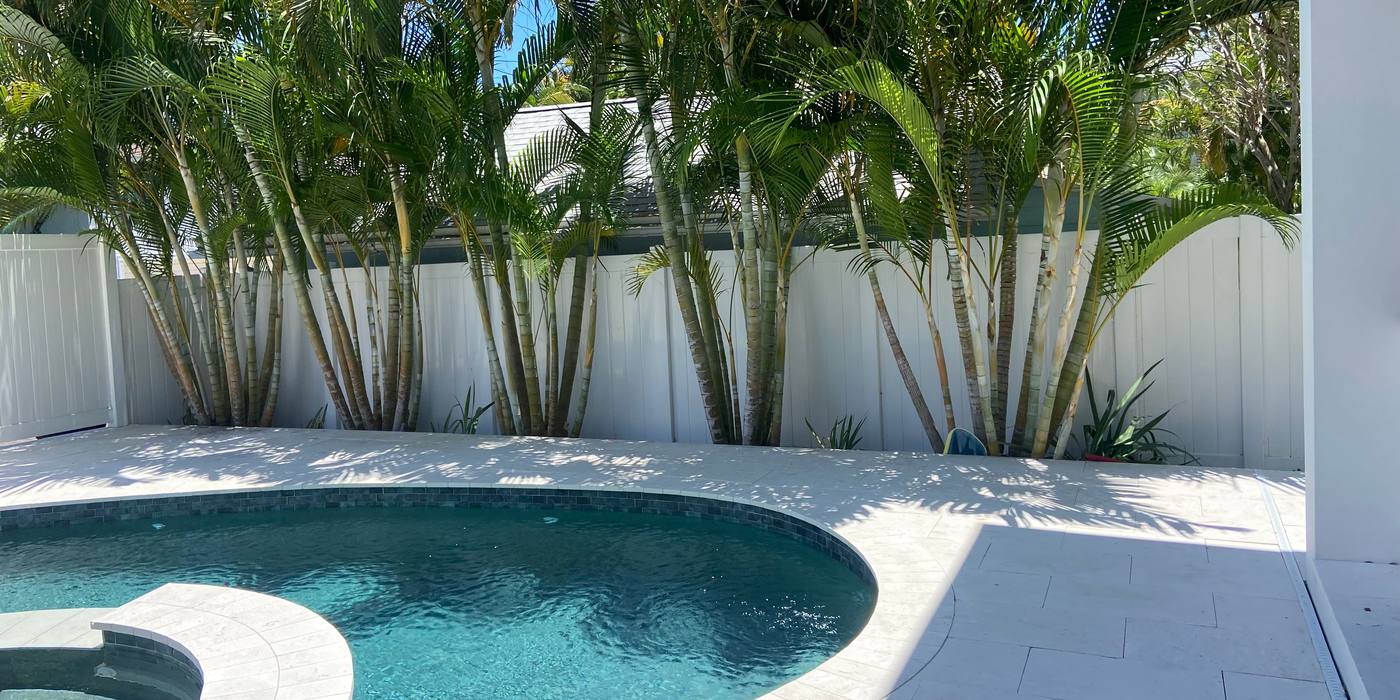
Recent jobs, photographed on site. Drag the divider on the first one to see the same corner of the yard before we started.

Before: overgrown palms crowding a pool deck Before
After: the same palms thinned and cleaned up, with the pool deck clear After
Pool garden, palms cleaned up
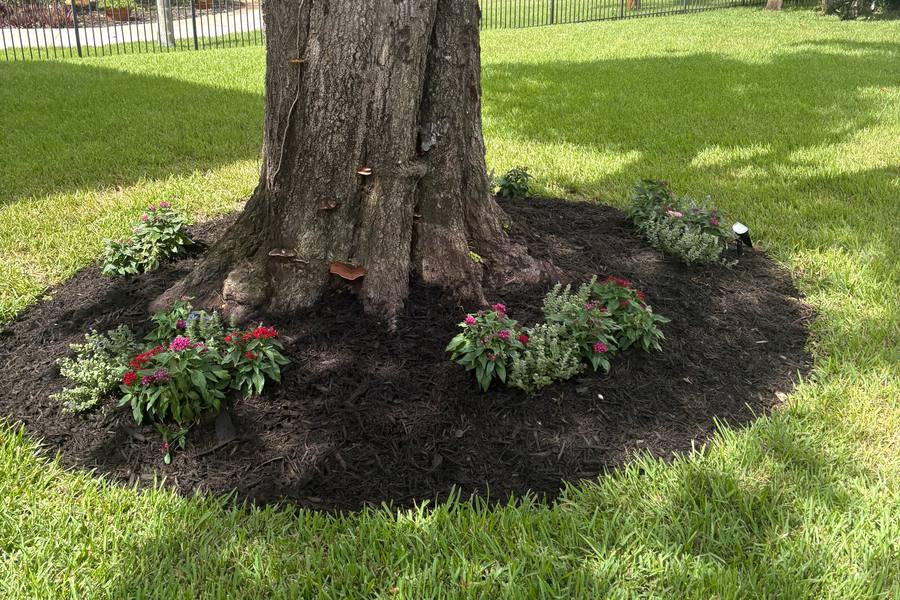
Freshly mulched ring around a tree trunk, planted with flowering annuals Tree ring, replanted
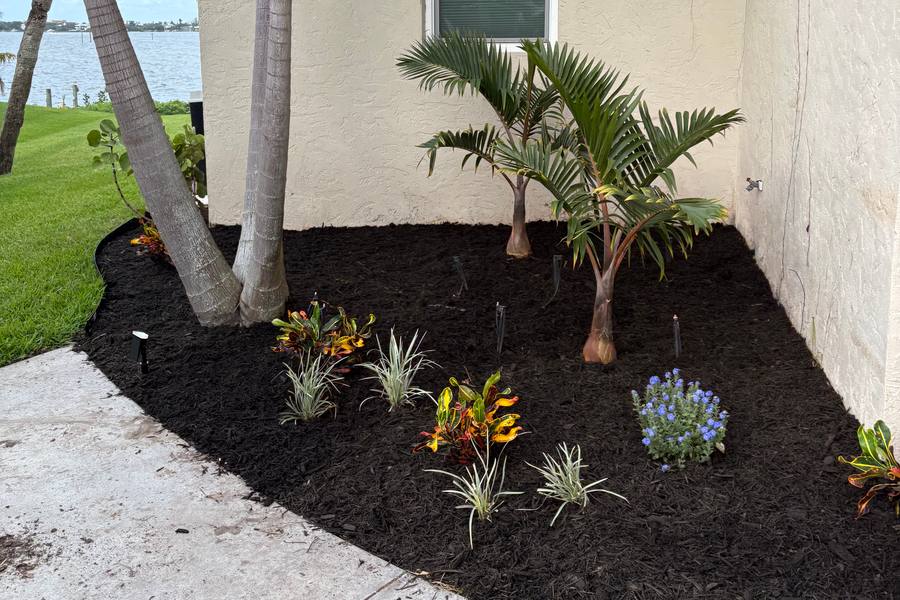
New corner bed beside a house, with young palms and flowering plants in fresh mulch New corner bed
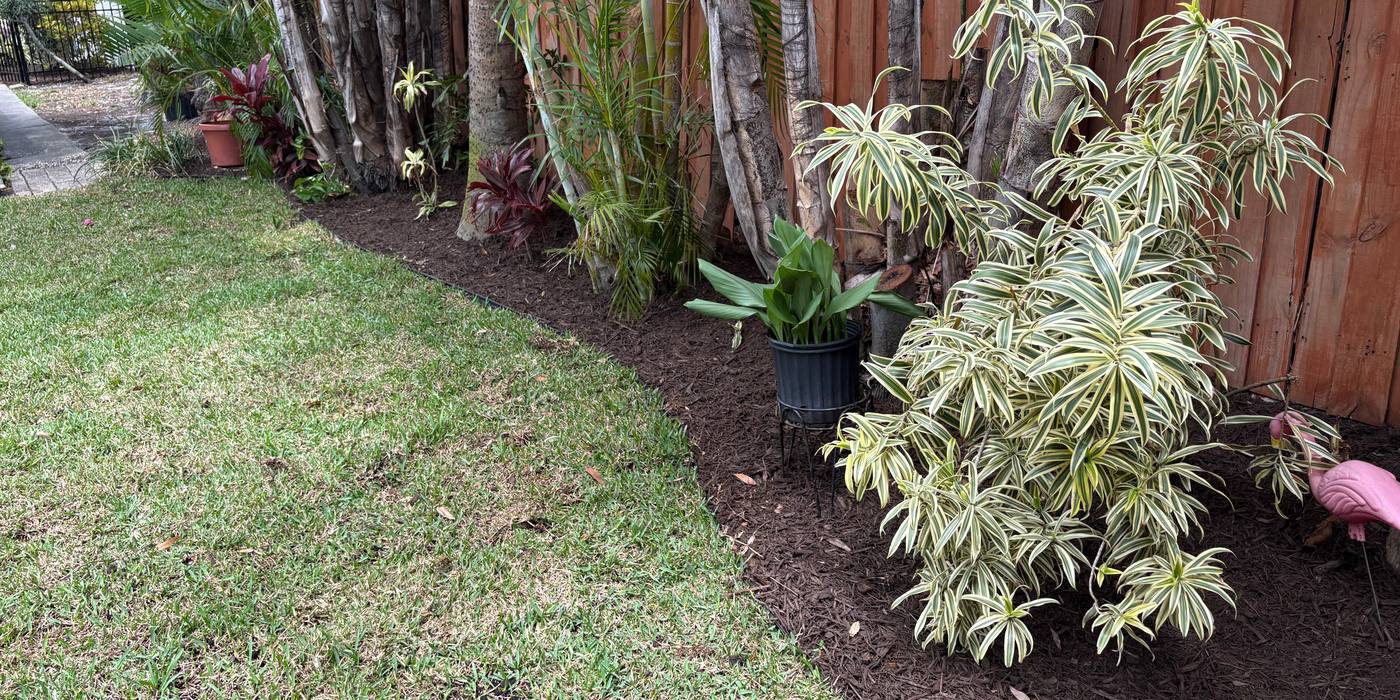
Side-yard bed along a wood fence, freshly edged and mulched beside the lawn Side yard, edged & mulched

Picture your own yard in one of these? Tell us what it's doing now — we'll walk it with you and put the plan and the price in writing.

Request an estimate

Before you ask

The questions we get first

The practical ones, answered plainly. If yours isn't here, the estimate form has a box for it and we do read them.

Are estimates really free?

Yes, and that includes coming out to the property. We walk it with you, talk through what you're after, and then send a written scope with the plant list and a line-item price on it. No charge, and no obligation to book once you have it.

What we won't do is give you a number over the phone for work nobody has looked at. Those numbers are always wrong, and they're usually wrong in the direction that costs you.

How far do you travel?

Northeast St. Petersburg — Snell Isle, Old Northeast, Crescent Lake, Crescent Heights, Euclid–St. Paul and Magnolia Heights.

Staying tight to that area is deliberate — it's what makes it realistic to come back and check how things are establishing. If you're just outside it, ask anyway.

Do you only plant natives?

No. Native describes how we approach a property, not a limit on what goes in it.

Florida natives and Florida-Friendly species carry the design, because they're the things that survive this coast without constant water and feeding. But if you want a particular tree, or there's something that's been in the yard for twenty years, we work with it. The point is a landscape that holds up here — not a rule about plant origin.

How long does an install take?

A planting bed or a section of sod is usually a day, sometimes two. A full front yard — beds, trees, sod and edging — tends to run several days. Paver work depends almost entirely on the base and the drainage, so a patio can be anywhere from a few days to a couple of weeks.

Whatever it is, the timeline goes in the written scope before you agree to anything, and you'll know if something changes.

Do I need to be there for the walkthrough?

It's better if you are, at least for the first one. Most of what makes a landscape right is stuff only you know — where the afternoon sun is unbearable, which window you look out of most, what the dog destroys, what the last person planted that you've hated ever since.

If you can't be there, we'll still walk it and send the scope. It just tends to take an extra round.

Do you maintain what you install?

Yes. Mowing, edging, trimming, seasonal cut-backs and re-mulching — on a regular schedule if you want it, or as-needed.

New planting is at its most vulnerable in the first year, so keeping the same people on it through establishment is usually the difference between a bed that fills in and one that gets replaced.

Are you insured?

Yes, including ladder and roof work. Ask for a certificate of insurance and we'll send it along with your written price.

Get started

Request an estimate

Tell us about the property and we'll come look at it. Estimates are free, and you get a written scope with the plant list on it — not a number over the phone.

  • We reply within one business day
  • On-site walkthrough, no charge
  • Written, line-item proposal with the plant list
  • No pressure, and no obligation to book

Rather just talk it through? 727-594-9694

Tell us about it

A few details is all we need to get started.

Booking holiday lights? Choose Holiday Lighting under “What are you looking to do?” and mention any palms or trees you'd like lit.